The Flat Factory
A scenic shop had the sets. Now it has a link to send.
The Flat Factory builds sets for film, TV and commercials in Vancouver. When it restarted under a new name, it went after work beyond film: trade shows, brand events, rentals. We designed and built its site, in English and French.
In film, the shop works for production designers, who already know what it can build. Adam Bartlett, the CEO, wanted clients who do not: trade show buyers, and customers for the wall flats the shop builds and rents. They may have seen the train car it built for an MGM commercial, but nothing on screen says who built it. And there was nothing to send them: the shop’s new name had a domain and no website.
We put the film work first: a client who wants a booth or an event built like a set should see the sets. So we wrote the line that opens the site, “Where Cinematic Storytelling Meets Brand Experience,” and let names the client already knows back it up: every set carries the name of the brand it was built for, and keeps a page of its own. We proposed playing each commercial on that page instead of linking out to it, and Adam agreed: “Let’s not send people away.” The photos were the shop’s own, taken on the floor and on set, so they got one rule: black and white on the home page and on every project card, colour once you open the project. Work built for other people’s brands reads as one shop’s.
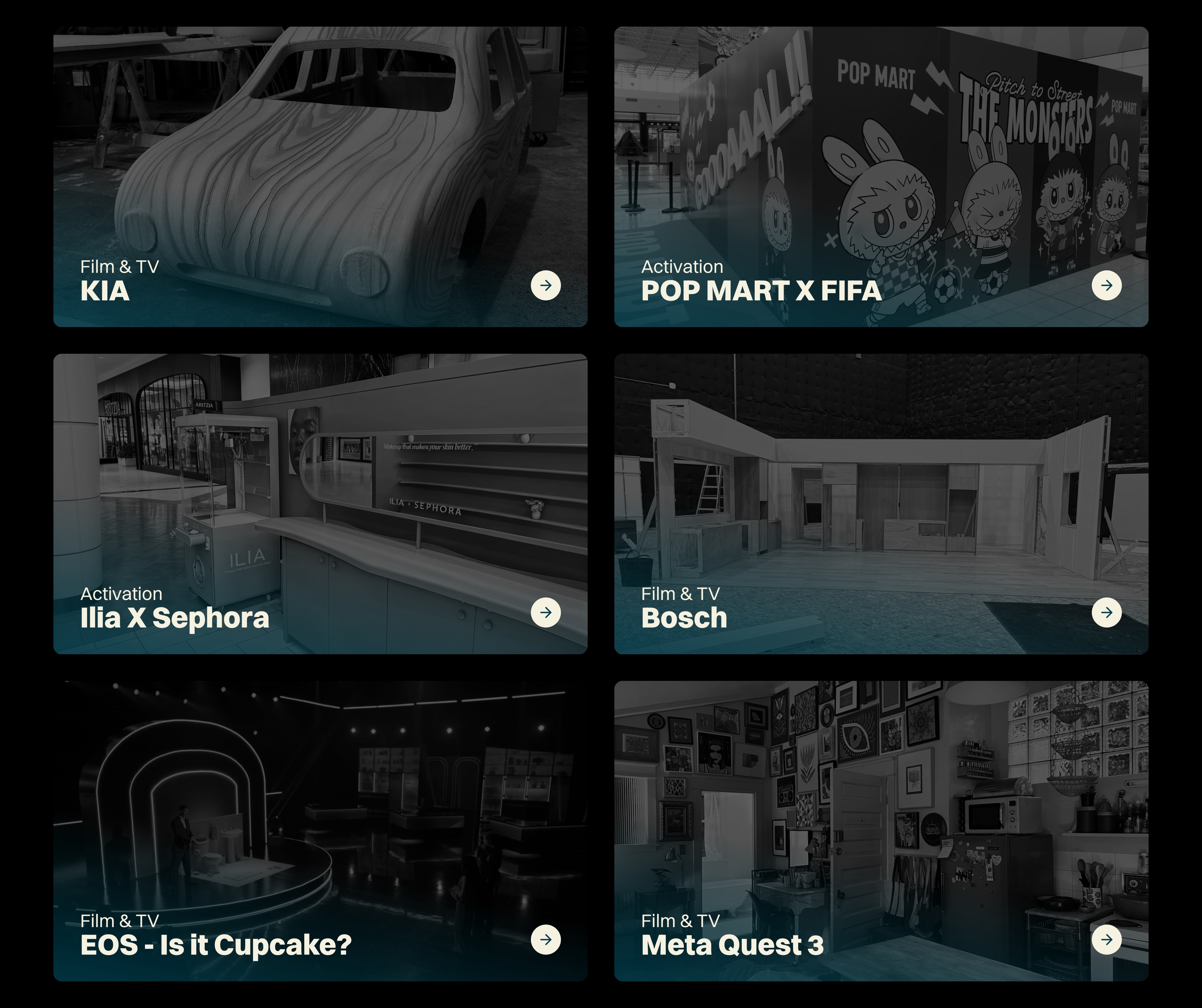
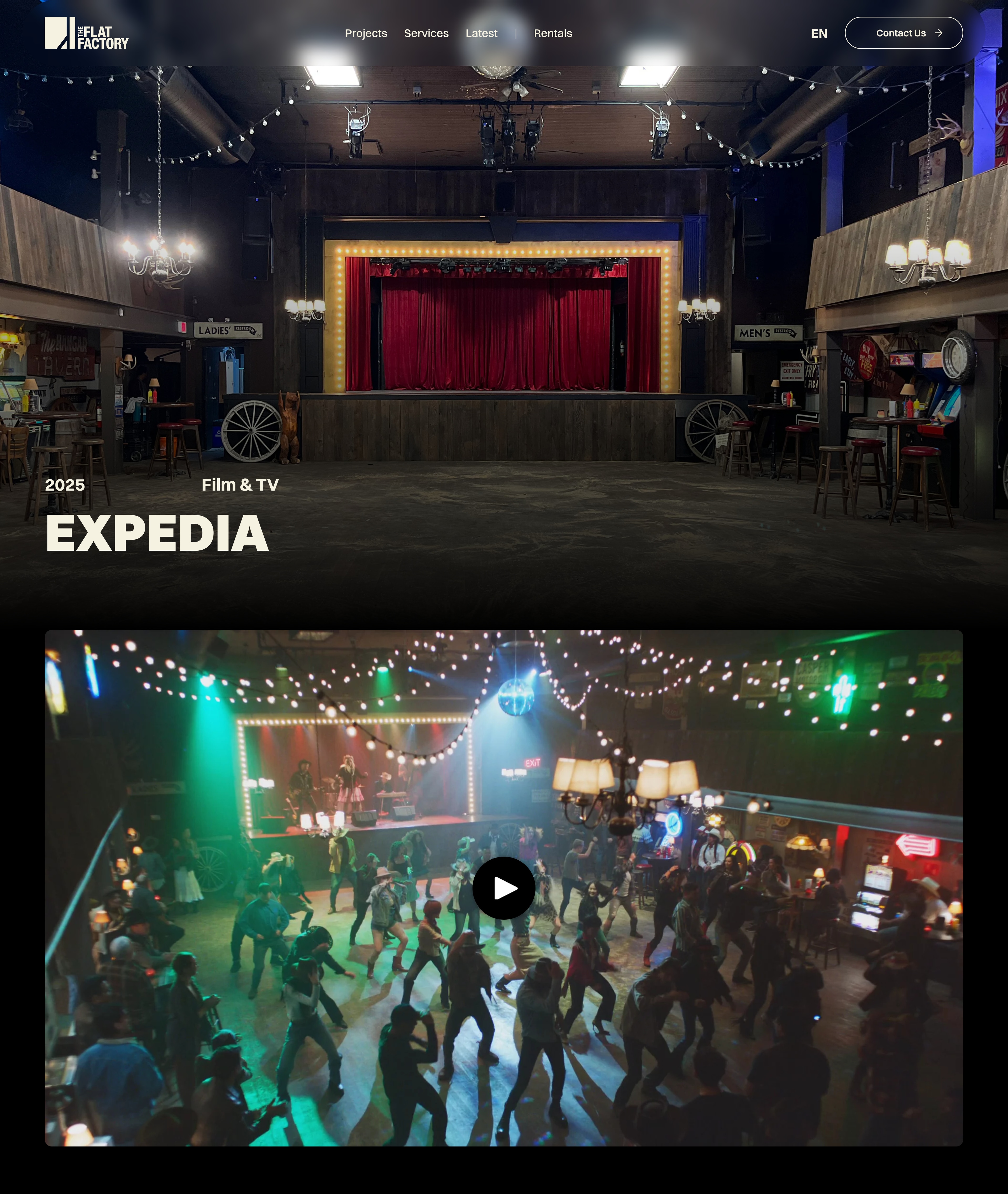
The gradient that opens the home page is drawn live in the browser, with a WebGL library we wrote. Further down, the featured sets take the whole screen, each sliding over the last. A set’s own page puts the commercial first and the build after it, in colour. The site runs on Next.js, with a CMS for projects, rentals and articles. The plan moved with the shop: rentals were due in a later phase, and when the shop asked in December for a page it could send straight to a customer, we designed it that week and brought it into the launch. Content came in between shoots, so we launched with what was ready and added the rest as it arrived.
The site went live at the end of January, and two days later Adam was already sending it out. The shop that had a domain and no website now has a page for each project, a rentals page to send a customer, and all of it in English and French. It has kept building with us since: pages for trade shows, events and film, new projects, and its first articles.
I am thrilled with what you have done.
This site’s job was to be the link a shop sends a new client, with nothing left to explain. Yours has the same job.